Who won the Israel election? Live results as vote counts continue
Benjamin Netanyahu’s leadership has been challenged by centrist newcomer Gadi Eisenkot - but it remains unclear who will lead the Knesset
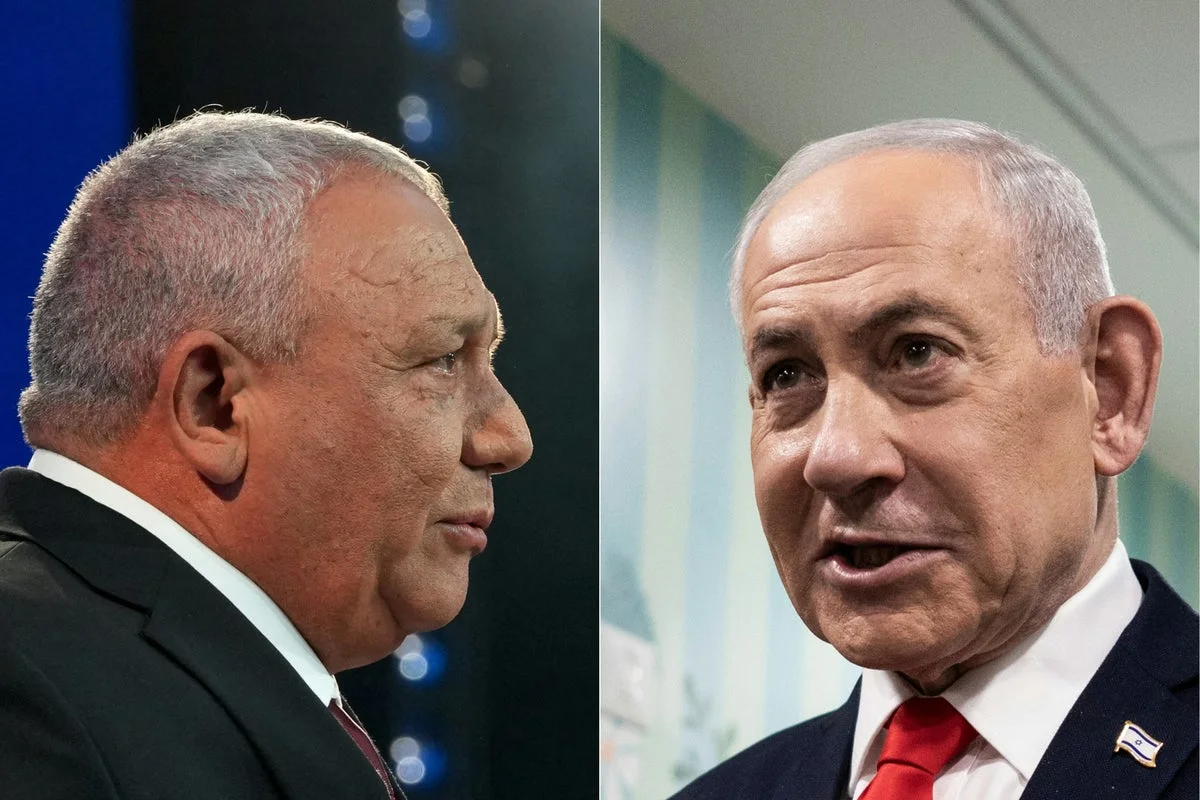
- •Israel's election remains uncertain with no clear majority for either Gadi Eisenkot or Benjamin Netanyahu's blocs.
- •Coalition negotiations are likely to be prolonged, with Netanyahu's bloc potentially falling short of the 61 seats needed to govern.
- •Smaller parties, including Arab-led groups, may hold significant influence in forming a government, complicating Netanyahu's path to power.
Results are still pouring in from Israel's election yet it remains unclear whether Gadi Eisenkot or Benjamin Netanyahu will lead the nation.
Israel's Central Elections Committee is continuing to tally votes, with expectations that definitive results won't be drawn up until Thursday. With 84 per cent of the votes tallied, neither side appears on track to win an outright majority in the 120-seat Knesset, Israel's parliament.
The prime minister's bloc was on course to win 54 seats, while main challenger Gadi Eisenkot's grouping would take 49, based on partial results shared on Wednesday early afternoon, local time. The remaining Arab-led parties, the Joint List and Ra'am, drop to 17 seats.
The N12 exit poll shows Netanyahu will likely lead with 52 seats, but it remains unclear who will take the Knesset (Reuters)
If projections hold, Netanyahu's right-wing bloc, which at its height held 68 seats, would fall short of the 61 needed to govern, leaving him with no clear path to forming a government.
Coalitions are a common outcome for Israeli elections with no single party having ever won an outright majority. Negotiations on forming a government can take weeks, with every Knesset seat counting. Small parties can become kingmakers as part of this system and key leaders often form blocs.
Netanyahu's bloc is made up of his own party, Likud, Ben-Gvir's party Jewish Power, Smotrich's party Religions Zionism, as well as UTJ, SHAS and People of Israel. Eisenkot's bloc is made up of Yashar, his own party, liberal Zionist parties Together and The Democrats, and right wing party Israel Our Home.
Channel 13 suggested a Netanyahu and Eisenkot's blocs could both get 51 seats (Reuters)
Arab parties Ra'am and Joint List are unaligned with either bloc but currently sit on 19 seats altogether. Meanwhile another unaffiliated party, the Reservists, has not even crossed the 3.25 per cent threshold required to make it in the Knesset.
Netanyahu's bloc has ruled out forming a government with Arab parties, which themselves campaigned on a platform of bringing down the prime minister and his far-right allies. Eisenkot, the leader of the Yashar party and a former military chief, has all but ruled out forming a government with Arab parties, complicating his path to power.
KAN11 also put Eisenkot and Netanyahu neck and neck (Reuters)
Far-right religious parties led by Itamar Ben-Gvir and Bezalel Smotrich were projected to take a combined 13 seats within Netanyahu's bloc – with no major gains for either of them.
While the projected results may represent a setback for Netanyahu and his nationalist-religious coalition, a deadlock could work in his favour, leaving the 77-year-old in office as a caretaker prime minister during what are likely to be prolonged coalition negotiations or even until another election can be held.
More than 60 per cent of the votes have come in (Reuters)
Eisenkot, 66, remains in the way of Netanyahu's ticket back into government as the strongest challenger to the right wing government. After entering politics four years ago and joining Netanyahu's war cabinet after the 2023 Hamas attack, he quit eight months later and criticised the prime minister's leadership.
Having lost a son and two nephews in the Gaza war, he has condemned Israel's response to the war, which has killed more than 74,000 Palestinians according to Gaza's health authorities, as a failure because Hamas remains in charge.
The current vote break down (Reuters)
The headquarters of the Joint List burst into whistles and applause when exit polls were released, on a historic night for turnout among Palestinian citizens of Israel.
"We refuse the occupation and racism, and we will remain here," said Faten Gattas, a candidate in the Joint List, in a speech at the alliance's headquarters in Nazareth. Candidates hoped high Arab turnout would allow them to play a decisive role in blocking Netanyahu's coalition from returning to power.
Official election results will be published a week after the election on 4 November.
More follows on this developing news story....
About The Independent (via Newsroom Daily Wire)
Dispatches and breaking reports syndicated from The Independent via the UK Wire Service.
Letters to the Editor & Reader Submissions
To preserve journalistic integrity and protect against automated web spam and unsolicited commercial backlink placement, open public commenting threads are closed.
We welcome thoughtful, verified commentary. Letters intended for publication on our editorial ledger must include your full name, city/country, and professional or institutional affiliation.
More in Politics & Policy
Trump takes credit for Netanyahu election performance after endorsing Israeli prime minister
Standing charges to be scrapped from gas bills next year – Treasury