
The climate crisis will destroy our economies – we learned this 20 years ago. When will we act? | Fiona Harvey
The radical Stern report showed that a low-carbon future is also good economics. But it seems that capitalism needs a reminder, says Fiona Harvey, an environment editor at the Guardian
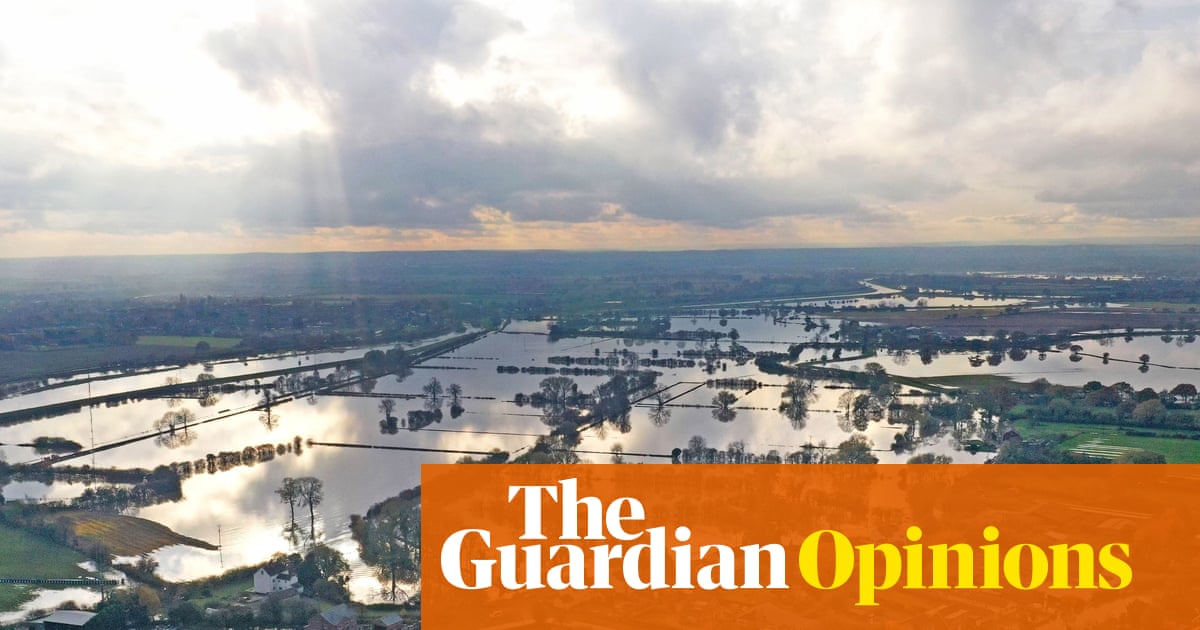
The radical Stern report showed that a low-carbon future is also good economics. But it seems that capitalism needs a reminder
Saving the only planet we have makes good economic sense. There is, after all, no money to be made on a dead Earth. There may be costs involved now, but they are worth paying to protect our children from certain destruction.
These propositions seem self-evident now. But two decades ago, mainstream economists had very different ideas. They had proved that the climate crisis would be a mere economic blip, easily absorbed by growing economies and therefore not worth spending money on. In their accounting, they considered ice caps and glaciers functionally worthless, that trees only add to GDP when they are cut down, and that a livable climate shouldn’t even merit a line on a spreadsheet.
What changed? Twenty years ago this week an earth-shaking report was published by Nicholas Stern, a former World Bank chief economist turned adviser to Gordon Brown. His review, The Economics of Climate Change, upended conventional wisdom among economists and dragged them into a new century. It set out, for the first time, in clear and bold terms, why investing in a low-carbon future makes economic sense.
The Stern review, in 700 dense pages full of graphs and data, is a model of transformative thinking. Using standard economic tools and methods, and in ways that other mainstream economists could understand, Stern made three key, and at the time radical, conclusions: that the costs of inaction on the climate were greater than the costs of action; that the climate crisis was a market failure; and that economic growth was compatible with cutting greenhouse gas emissions.
Stern’s crucial insight, the revolutionary idea on which his whole thesis turned, was that future generations have as much right to be born as we did. Traditional economics mistrusts anything that could happen in the future, applying a “discount rate” to it. Likely future profits are reckoned as lower in value than those of the present, as are likely future losses.
That might make sense when compiling companies’ accounts, as it prevents them over-selling themselves on optimistic assumptions. But applying a discount rate where the climate is concerned is a gross distortion – effectively, it means future lives are assigned less value, and so taking actions now that protect children when they grow up are made to appear uneconomic.
To gauge how startling this proposal was at the time, consider William Nordhaus, former professor of economics at Yale, whose work was the previous standard for climate economics. He confidently asserted in the early 1990s that countries should budget for “moderate” global heating, of about 3C to 4C above preindustrial levels, because below that the cost of cutting greenhouse gas emissions would outweigh the damage of climate change. In order to reach these conclusions, Nordhaus’s work relied on the same “discounting” assigned to future damage and future lives that Stern set out to challenge.
The vitriol poured on Stern by fellow economists – including Nordhaus – was intense. I covered it at the time for the Financial Times, and I remember the spluttering outrage of traditional economists, fuming that the discount rate – a central tenet of Treasury forecasting around the world – could be meddled with. The ethical point appeared to elude them. Ethics have little place in GDP.
But Stern stuck to his analysis, and in the 20 years since it has been found sound – if anything, he underestimated both the rapidity of heating and economic consequences, and overestimated the cost of renewable energy. Stern’s work liberated many governments: they could now justify bold climate strategies to investors, aid donors and the ever-present bond markets. Conversely, laggard administrations could be challenged at the ballot box and, increasingly, in court.
Today, Stern says, if he were re-doing the review, he would place more emphasis on the role of nature, as the collapse of biodiversity around the world is a key economic and national security threat that has been grossly underestimated, and neglected as a result.
It might seem, in 2026, as if Stern has won the argument. But traditional economic approaches to the climate refuse to go away. In 2018, even after a deluge of science showing that 3C heating would leave coastal cities under water and swathes of agricultural land as desert, Nordhaus published a paper claiming that 3C would reduce global GDP by just 2.1%, and even a 6C increase would incur just 8.5% GDP loss. However, other climate scientists have indicated that at 6C widespread famine could leave billions of people, in economic terms, suboptimally productive. Or, as the rest of us might say, dead.
Guardian columnists and writers on what they’ve been debating, thinking about, reading, and more
In 2018, Nordhaus was awarded the Nobel prize. His work on the climate was prominent in the citation and his prize lecture. In hundreds of universities around the world, economists are still being trained today in those same traditional growth models he used. And sunny predictions that the climate crisis could shave just a few per cent off GDP are still in use, shockingly, among governments, businesses and international institutions, even as temperatures shatter records and the supercharged El Niño threatens trillions of dollars in damages.
The results are plain to see: governments refusing to act, markets over-valuing fossil fuel companies, investors punishing businesses that dare to prepare for a low-carbon world. Many insurance companies, supposedly the enforcers of probity in capital markets, are alleged to knowingly be fudging their figures to massage climate risk away, as the Guardian revealed this month.
If we are to have a thriving future economy, as well as a living planet and robust human societies, we need a new system of economics that values these things. Stern showed the way. Twenty years later, the rest of the world must catch up.
Fiona Harvey is an environment editor at the Guardian
About The Guardian (via Newsroom Daily Wire)
Dispatches and breaking reports syndicated from The Guardian via the UK Wire Service.
Letters to the Editor & Reader Submissions
To preserve journalistic integrity and protect against automated web spam and unsolicited commercial backlink placement, open public commenting threads are closed.
We welcome thoughtful, verified commentary. Letters intended for publication on our editorial ledger must include your full name, city/country, and professional or institutional affiliation.
More in Opinion & Analysis

Will John Healey’s ‘breathing space’ budget deliver what Britain needs? Our panel responds | Panel

A bitter night in Israel for all who craved a fresh start. Netanyahu survives for now – and we are more divided than ever | Dahlia Scheindlin