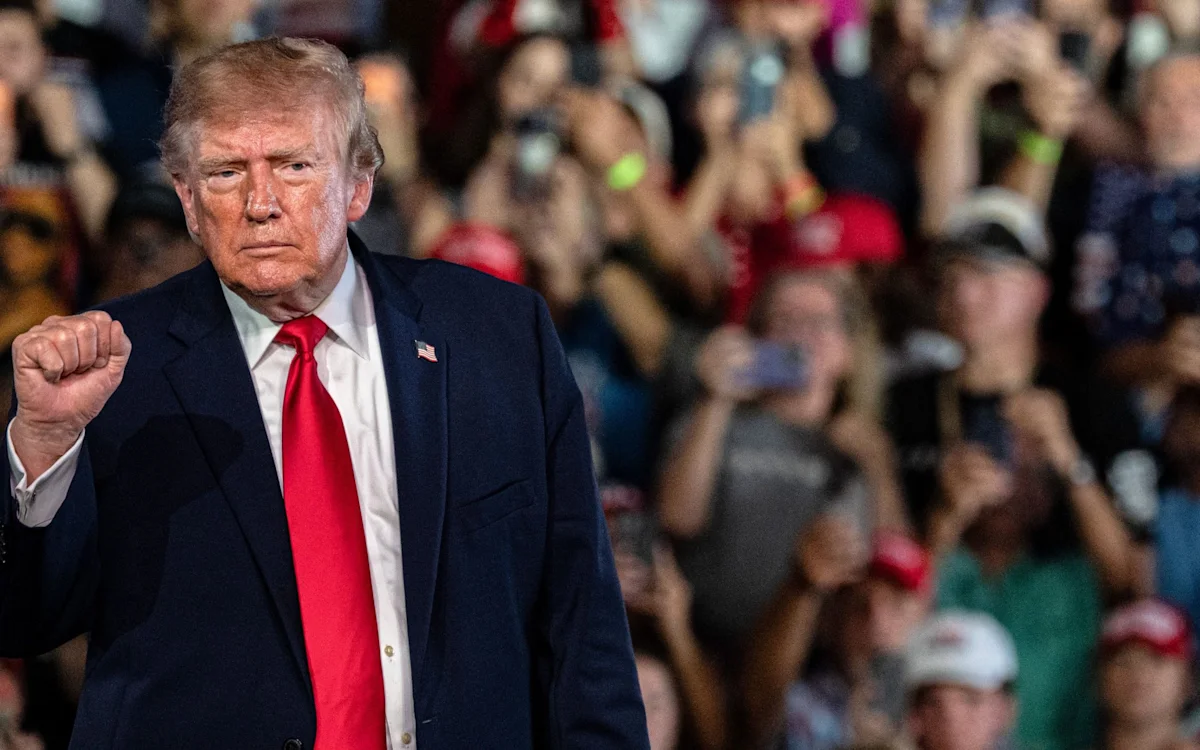
Israel faces another period of political uncertainty — here are the scenarios
If neither bloc reaches the 61 seats needed for a majority in Israel's parliament, a number of coalitions are possible.
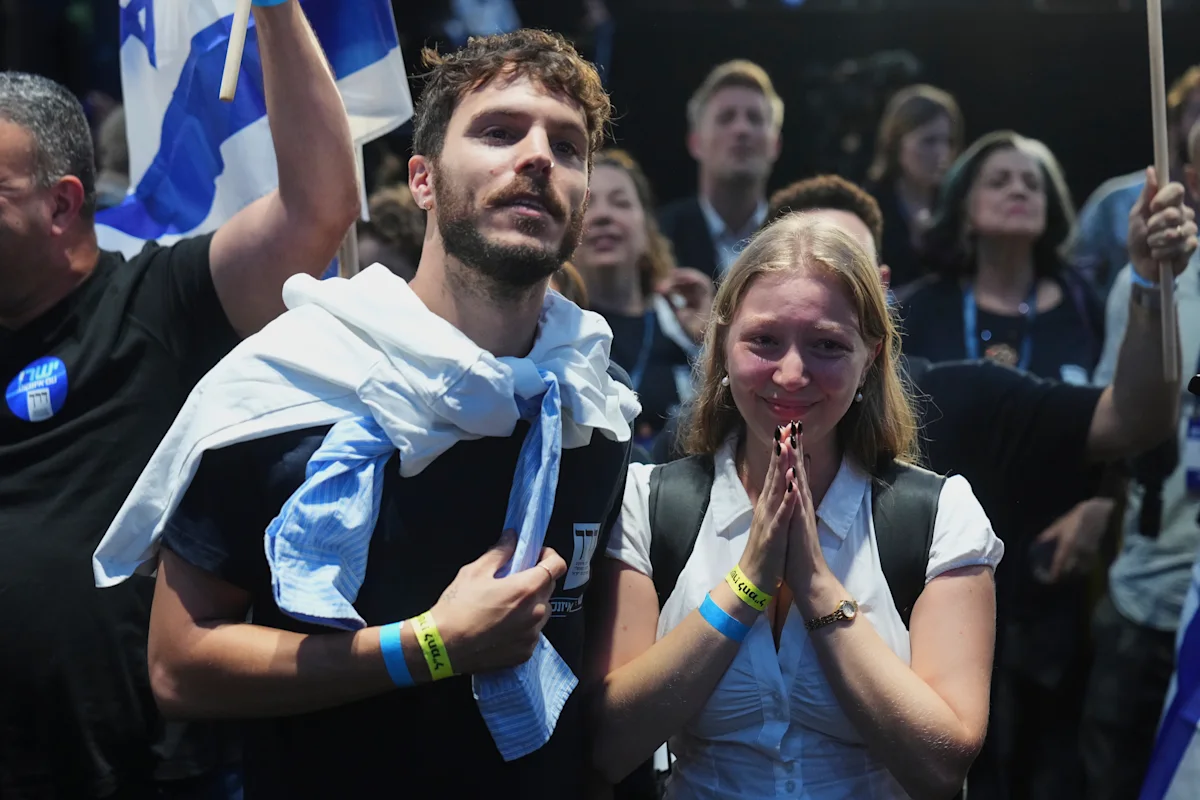
- •Israel's political landscape remains uncertain after the election, with no clear winner emerging to form the next government.
- •The Arab parties may hold significant power in the negotiations, potentially becoming kingmakers in the formation of the next government.
- •Multiple scenarios are possible, including Netanyahu forming a new government or Eisenkot seeking support from various quarters to assemble a parliamentary majority.
Few election campaigns in Israel's history have been as polarizing as this year's, which also served as a referendum on the lessons of the devastating attack by Hamas militants on Oct. 7, 2023. And on Election Day, the country appears as deeply divided as ever.
Despite the bitter political battles, the first exit polls suggest that Prime Minister Benjamin Netanyahu's governing coalition and the alliance led by Gadi Eisenkot could end election night virtually neck and neck.
Israel thus appears headed for another period of political uncertainty. Initial exit polls and projections from Israeli broadcasters suggest a narrow lead for the opposition, with 52 seats to the governing bloc's 50. But the margin is too small, and the night still too young, to draw any firm conclusions.
Netanyahu appears to have performed better than expected with his Likud party — despite the allegations that he did not do enough to prevent the Oct. 7 attacks and his ongoing corruption trials. Likud also appears to have outperformed the party of his main rival, Eisenkot.
According to initial projections by Israel's Channel 12, Netanyahu's party is on course to win 24 parliamentary seats, compared with 22 for Eisenkot's. Yet in opinion polls over recent weeks, Eisenkot had generally held a clear lead in head-to-head comparisons with Netanyahu.
Netanyahu's opponents may be celebrating, but it remains unclear who will form the next government. What is clear is that the power struggle could continue: between Netanyahu's bloc of Likud, ultra-Orthodox parties and parties aligned with the settler movement on one side, and Eisenkot's opposition alliance, encompassing conservative, liberal and left-wing parties, on the other.
The Arab parties — notably the Islamist Ra'am and the left-wing Joint List — may have performed unexpectedly well. They have not committed themselves to either camp and could become kingmakers from a position of strength.
If, as the initial projections suggest, neither bloc reaches the 61 seats needed for a majority in the 120-member Knesset, several scenarios are possible.
Netanyahu could form a new government by persuading parties in the opposition alliance to switch sides. Indeed, some are ideologically closer to him than to their own partners in Eisenkot's alliance — particularly the religiously conservative former Prime Minister Naftali Bennett and former Defense Minister Avigdor Lieberman, who is secular but also conservative.
Both have had serious falling-outs with Netanyahu, but there is political common ground. However, some of their voters might feel betrayed if, after campaigning against Netanyahu, they were to keep him in power.
Under Israeli electoral law, President Isaac Herzog has considerable discretion in deciding whom to task with forming a government. That person does not need to demonstrate that they have already assembled a governing majority; they simply need to win the initial vote of confidence.
To do so, Eisenkot could seek support from different quarters to assemble shifting parliamentary majorities — for example, from defectors in the outgoing governing parties who might be willing to back his security-focused approach, or from Arab parties.
The Islamist Ra'am and the left-wing Joint List have signaled a willingness to support Eisenkot, although some of his partners in the opposition bloc reject a formal coalition with Arab parties.
It is conceivable that Eisenkot reaches a formal arrangement with the Arab parties. For example, he could strike an agreement guaranteeing him a stable majority in the Knesset while governing without Arab ministers in the Cabinet.
But even a full coalition with Arab ministers cannot be ruled out, despite statements to the contrary. After all, even Eisenkot's conservative ally Bennett and the liberal Lapid have previously governed in coalition with Ra'am. Netanyahu, too, has held talks with Arab parties about forming a coalition.
This time, however, he has explicitly campaigned against such an arrangement.
Herzog reportedly favors bringing the outgoing coalition and the opposition together in a unity government. One possible element of the negotiations could be a presidential pardon for Netanyahu in connection with his corruption trials.
Such a wartime cabinet would be particularly conceivable if open war with Iran were to break out again. In the final days before the election, Netanyahu hinted at the possibility of a renewed confrontation with Iran. The Israeli military's General Staff, however, reportedly sees no reason for another round of fighting.
The forecasts released by television broadcasters are only preliminary estimates. The actual balance of power could still shift as official votes are counted over the coming days. If no coalition can be formed, Israel could face a protracted period of political negotiations.
In the meantime, the incumbent government would continue to conduct the affairs of state. If all efforts to form a government fail, another election could become necessary. A return to the seemingly endless rounds of elections of six years ago.
The consequences of such a political crisis would likely extend far beyond Israel's borders. This is particularly true of security policy, the future course of the war and potential regional agreements, relations with the United States, and efforts to bring greater stability to the Middle East.
Böhmer is a reporter for WELT which, like POLITICO, is a member of the Axel Springer Global Reporters Network. The network harnesses the resources of the company's newsrooms to publish ambitious scoops, investigations, interviews, opinion pieces and analysis. It allows journalists — including those from POLITICO, Business Insider, WELT, BILD, The Telegraph, Onet and Fakt — to collaborate on major stories for an international audience of hundreds of millions across platforms: online, print, TV and audio.
About Politico (USA Wire)
Dispatches and breaking investigations syndicated from Politico for News Room Daily.
Letters to the Editor & Reader Submissions
To preserve journalistic integrity and protect against automated web spam and unsolicited commercial backlink placement, open public commenting threads are closed.
We welcome thoughtful, verified commentary. Letters intended for publication on our editorial ledger must include your full name, city/country, and professional or institutional affiliation.
More in Technology
US judge narrows French President Macron's defamation lawsuit against podcaster

US embassy worker in London probed over child abuse images is senior Air Force officer