
Explainer-How France's 2027 budget battle could play out
By Leigh Thomas PARIS, Oct 20 (Reuters) - French Prime Minister Sebastien Lecornu's minority government faces a particularly treacherous budget season as opp...

- •France's minority government faces a budget battle with opposition parties over deficit-cutting plans ahead of the presidential election.
- •Opposition parties may force the government to consider alternative options, including invoking Article 49.3 or passing an emergency law, to pass the budget.
- •A failure to pass the budget could lead to unprecedented budget paralysis, freezing investment and increasing welfare costs, potentially widening the deficit by half a percentage point.
PARIS, Oct 20 (Reuters) - French Prime Minister Sebastien Lecornu's minority government faces a particularly treacherous budget season as opposition parties dig in for a fight over his deficit-cutting plans before an April-May presidential election.
The government is struggling to rein in its strained finances, with protesters demanding more money for underfunded public services at a time when borrowing costs have risen to their highest since 2022 on the bond market.
Here's how the budget battle could play out:
The budget bill is being reviewed in the lower house of parliament, where it is having a rough ride. A vote on the taxation side of the bill was due on Tuesday, but has been pushed back to October 27 because a large number of amendments still need to be discussed.
Budget Minister David Amiel has warned that amendments already approved would worsen the budget deficit by €10 billion ($11 billion).
The constitution grants lawmakers 70 days to debate and amend it, first in the lower house and then in the Senate before it returns to the lower chamber for a final vote.
However, the bill is unlikely to reach that point if opposition parties hold firm against Lecornu's plans for €54 billion in budget savings.
That means the government will likely have to consider other options to pass the budget.
RETURN OF ARTICLE 49.3?
Since a 2024 snap legislative election produced a hung parliament, successive minority governments have leaned on Article 49.3 of the constitution to force through budgets without a vote.
However, opposition parties can respond with threats of a no-confidence motion, forcing the government to make concessions — typically to Socialists, centrists or conservatives — to survive. With political parties already positioning for 2027, there may be little appetite to compromise this time.
If a no-confidence vote is held and the government defeated following a 49.3, the budget bill would be dropped and the next cabinet forced back to the drawing board.
If no budget passes after the 70 days, and the government doesn't invoke 49.3, it could pass an emergency law rolling over the 2026 budget until a proper one can be passed after the election.
But the new president is expected to dissolve parliament and call fresh elections, meaning a full 2027 budget might not pass until well into the second half of the year, just as work begins on the 2028 budget.
A finance ministry report warned such a rollover would cause unprecedented budget paralysis, freezing investment and planned defence-spending increases while welfare costs keep climbing.
The deficit could widen by at least half a percentage point, denting investor confidence and pushing up borrowing costs, it said.
If the government survives past mid-December without a budget law, it could try passing one by ordinance, bypassing parliament entirely on the state's most important annual legislation.
This has never been done in the Fifth Republic, and legal experts view it as a nuclear option likely to trigger a no-confidence vote. Unlike the 49.3 route, the fall of a government afterwards wouldn't automatically void a budget passed by ordinance.
Macron would likely struggle to install a new government before the election, however, leaving Lecornu's cabinet in a caretaker role. In practice, an ordinance budget would probably serve as a stopgap until a new government wins parliamentary backing for its own fiscal plan late in 2027.
(Reporting by Leigh Thomas; Editing by Hugh Lawson, Richard Lough and Andrew Heavens)
About Reuters (USA Wire)
Dispatches and breaking investigations syndicated from Reuters for News Room Daily.
Letters to the Editor & Reader Submissions
To preserve journalistic integrity and protect against automated web spam and unsolicited commercial backlink placement, open public commenting threads are closed.
We welcome thoughtful, verified commentary. Letters intended for publication on our editorial ledger must include your full name, city/country, and professional or institutional affiliation.
More in Business & Markets
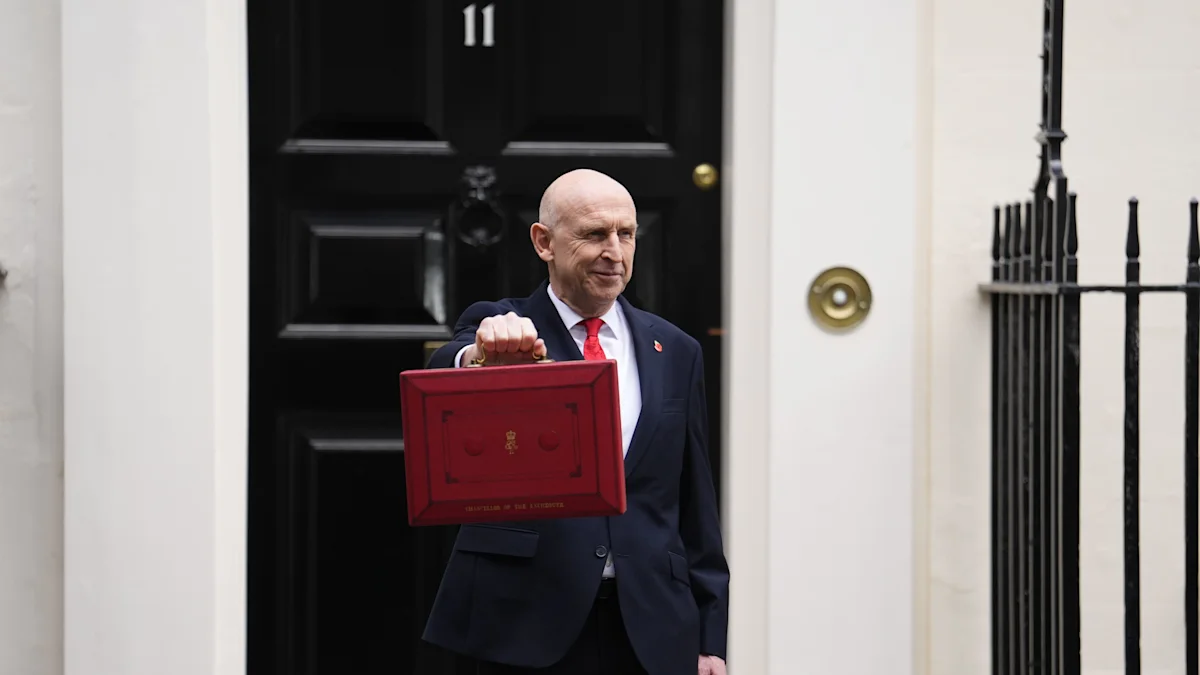
Budget Live: Chancellor John Healey promises support for ‘working people’

Federal judge rules top US prosecutor in Los Angeles isn't legally serving